

賴清德總統4日接受 《紐約時報》舉辦之「DealBook Summit」視訊專訪,被問及北京攻台的時間表是什麼?賴總統說,「我們必須做最壞的打算,同時做最好的準備,不管中國解放軍什麼時候要採取動作,台灣一定要先做好準備,這是我們基本的原則。」
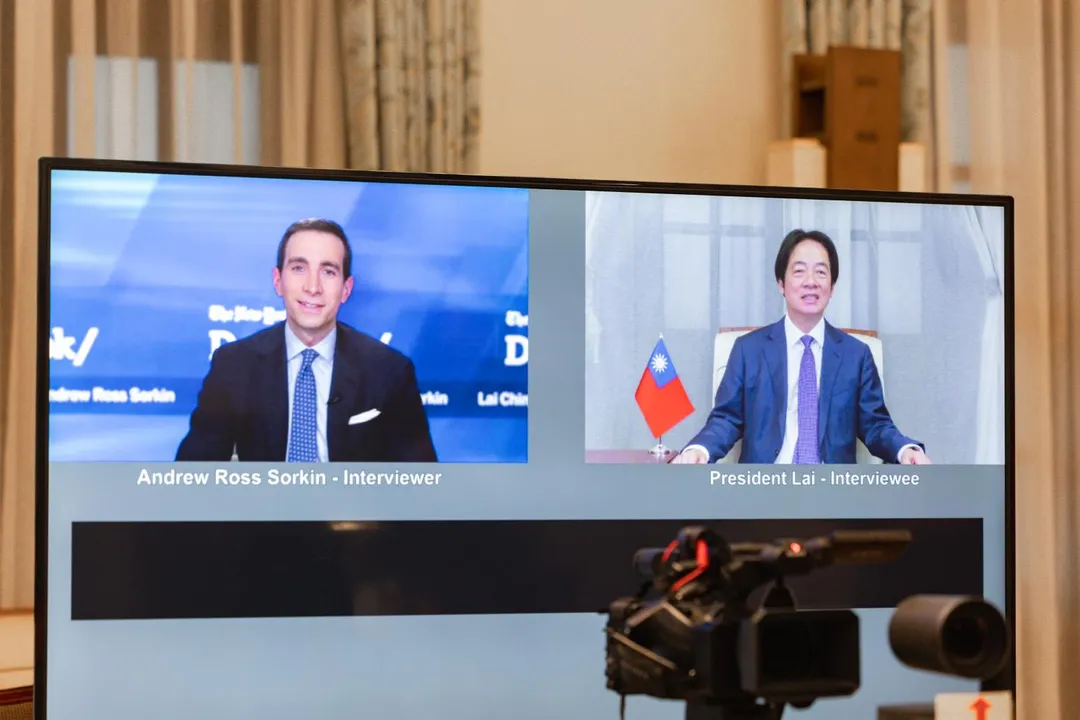
★專訪問答內容,中英文逐字稿如下:
Q: Here’s where I want to start the conversation. You’ve just announced that you’re introducing a 40-billion-dollar military spending budget to buy more weapons from the US to try to deter China from invading Taiwan. What indicators, and perhaps new indicators, are you looking at that shows an increased threat to Taiwan?
問:我首先想要請教總統的是,您公布台灣新的國防特別預算400億美元,台灣打算用這個預算來購買更多美國的武器,試圖嚇阻中國入侵台灣。請問您是否看到一些指標,或是有什麼新的指標,讓您認為中國侵略台灣的威脅正在升高?
總統:中國對台灣的軍演越來越頻繁,強度也越來越強,甚至已經跨出第一島鏈到第二島鏈,已經影響到印太區域。另外,中國對台灣的統戰滲透也越來越厲害,基於保護國家安全,同時善盡維護台海和平穩定的責任,因此,我們提出國防特別預算。
We can see that China’s military drills targeted at Taiwan are becoming increasingly frequent and intense. They have even moved beyond the first island chain into the second, affecting the wider Indo-Pacific region. At the same time, China’s united front influence campaign against Taiwan are also becoming more serious. In order to safeguard national security and fulfill our responsibility to maintain peace and stability across the Taiwan Strait, we have announced this special defense budget.
我們篤信,和平無價,戰爭沒有贏家,我們對和平有理想,但是不能夠有幻想,和平必須要靠實力才能夠獲得,所以我們一方面提高國防預算、強化國防力量,另一方面,我們也減少對中國的依賴,強化我們的經濟韌性。2010年台灣對外投資有高達83.8%投資在中國,但是在去年只剩下7%左右。另外,我們也跟民主陣營站在一起,發揮肩並肩的力量,發揮嚇阻的效果,以備戰來達到避戰,來達到和平的目標。
We believe that peace is priceless, and war has no winners. While we aspire to peace, we cannot harbor illusions about it. Peace must be secured through strength. This is why we are increasing our defense budget and strengthening our national defense capabilities, while also cutting back our economic dependence on China. This includes improving our economic resilience. In 2010, 83.8 percent of Taiwan’s outbound investment went to China; last year, that figure had dropped to around 7 percent. We are also working side-by-side with other democracies to reinforce deterrence. Robust preparations are the best way to avoid war and achieve peace.
Q: Let me ask you this: President Xi has said that his goal for China’s military is to be capable of taking Taiwan by force by 2027. You said that Beijing is accelerating these preparations for an attempted invasion. So what do you think China’s timeline is now?
問:中國國家主席習近平曾表示,解放軍的目標是在 2027 年前具備以武力奪取台灣的能力。您也提到北京正在加速為可能的入侵行動做準備。那麼,您認為北京現在的時間表是什麼?
總統:我們必須做最壞的打算,同時做最好的準備,不管中國解放軍什麼時候要採取動作,台灣一定要先做好準備,這是我們基本的原則。
We must ensure the best possible preparations for the worst-case scenarios. Whatever timeline the PLA may have, Taiwan’s fundamental principle is that we must be ready first – this is our basic principle.
我利用這個機會,除了向國際社會表達,台灣一定會做好保護自己國家,同時維護區域和平穩定的立場,也非常感謝國際社會,包括G7、美國總統、日本的政治領袖等,大家都關注台海和平穩定並且強調台海和平穩定是世界安全與繁榮的必要元素。這些國際領袖的共同主張對於台灣社會的穩定以及區域的和平發展是有莫大的幫助,我們非常希望台灣能夠跟國際社會共同維護整個以規則為基礎的國際秩序。
I also want to use this opportunity to reiterate to the international community that Taiwan will do everything necessary to protect itself and to safeguard regional peace and stability. We are grateful to the international community, including the G7, the President of the United States, Japan’s political leaders, and many others for their interest in cross-strait peace and emphasizing that stability in the Taiwan Strait is essential to global security and prosperity. Their shared position greatly contributes to stability in Taiwan and peace in the region. We hope Taiwan can continue working with the international community to uphold a rules-based international order.
Q: Well let me ask you about that because, Mr. President, last week you said the relationship between Taiwan and the US is rock-solid. How confident are you that the United States, and in particular President Trump, would come to the aid of Taiwan if China were to invade?
問:總統上週也提到您認為台美關係堅若磐石。我想了解總統對此有多大的信心?如果中國入侵台灣,美國,特別是川普總統,有多大的機會會協防台灣?
總統:台灣與美國雖然沒有正式的邦交關係,但是台灣非常感謝美國國會通過《台灣關係法》,也感謝雷根總統提出對台灣的六項保證。數十年來,美國政府及國會跨黨派對台灣都提供強而有力的支持,因此台灣與美國的關係的確是堅如磐石。川普總統上任之後,他對台灣的各項合作並沒有中斷,甚至有增加的趨勢,我們非常期待能與美國透過這一次的關稅談判,不僅解決美國所需要的貿易逆差問題,也可以深化台灣與美國的經貿關係,更進一步強化美國與台灣的友盟關係。
Although Taiwan and the United States do not have official diplomatic relations, Taiwan is deeply grateful to the U.S. Congress for passing the Taiwan Relations Act and to President Ronald Reagan for the Six Assurances. For decades, successive US administrations and both parties in Congress have strongly supported Taiwan based on this foundation. Our relationship truly is rock-solid. Since President Trump took office, cooperation with Taiwan has not only continued but even expanded. We look forward to working with the United States through tariff negotiations – not only to help address their trade deficit, but also to deepen bilateral economic relations and strengthen our friendship.
Q: We’ve all been watching what’s been happening play out in Ukraine between Ukraine and Russia. And there have been questions inside Ukraine about the support that the United States has provided or not in terms of how this ultimately gets settled. How do you view what’s happening in Ukraine right now and the role that the U.S. is playing there?
問:我們一直關注烏克蘭與俄羅斯之間的局勢發展,而在烏克蘭國內,也出現了一些關於美國所提供的支持是否足夠、以及這將如何影響衝突最終解決方式的討論。您如何看待當前烏克蘭的局勢,以及美國在其中所扮演的角色?
總統:台灣和烏克蘭人民站在一起,我們非常希望這一場不理性、沒有正當性的戰爭能儘快結束,讓烏克蘭人民能脫離痛苦。但是戰爭的結束,我們也希望能尊重烏克蘭的國家尊嚴,還有烏克蘭人民的福祉,同時也能避免後續的戰爭。
Taiwan stands with the people of Ukraine. We hope this irrational and illegitimate war will be over as soon as possible so that the Ukrainian people will no longer have to suffer. However, in ending this war, we also hope that Ukraine’s national dignity and the wellbeing of its people will be respected, and future conflict will be prevented.
Q: You talked about trade earlier. When you talk about the relationship between the U.S. and Taiwan, one of the reasons that Taiwan is so valuable, such a strategic asset – and President Trump talks about it this way about Taiwan – is because of semiconductors. And one of the things that he says is that he hopes that the U.S. is going to be manufacturing 40 to 50 percent of all semiconductors in the next couple of years with your help. Does that make Taiwan more valuable ultimately to the U.S. or do you worry at all that it makes it less valuable to the U.S.?
問:剛才您提到美台間的貿易,台灣在戰略資產方面之所以如此重要,其中一個原因——川普總統這樣說——就是因為半導體產業。而川普總統曾表示,他希望未來幾年美國能在台灣的協助下,製造全球 40% 到 50% 的半導體晶片。依您的看法,這會讓台灣對美國而言變得更有價值,還是反而會降低台灣的重要性?
總統:台灣雖然擁有半導體產業,在未來的人工智慧時代扮演關鍵角色,但我必須謙卑地說,台灣半導體產業是全世界共同的資產,因為半導體產業是一個生態系。好比說美國擁有研發、設計以及廣大市場,日本擁有原料以及設備,荷蘭擁有先進的半導體製程設備,台灣只不過是擁有邏輯製造,韓國擁有快速記憶體的晶片製造能力。
Taiwan’s semiconductor industry plays a crucial role, especially as we enter the future AI era. But I want to emphasize, with humility, that Taiwan’s semiconductor sector is a global asset. The industry functions as an ecosystem: the U.S. excels in R&D, design, and has the world’s largest market; Japan provides materials and equipment; the Netherlands makes advanced lithography systems; Taiwan specializes in logic chip manufacturing; and Korea leads in flash memory chips.
換句話說,半導體產業是一整個生態系,必須要全世界共同合作才有辦法發揮功能。因此,台灣政府是支持台積電或台灣的半導體產業到美國、到日本、到歐洲,或任何公司認為需要去的地方,以促進世界的繁榮跟進步。
In other words, semiconductors are a global ecosystem – it requires worldwide cooperation to be effective. This is why our government supports TSMC and other Taiwanese semiconductor firms as they invest in the U.S., Japan, Europe, or wherever they believe is needed. This contributes to global progress and prosperity.
因此當川普總統希望台灣的半導體產業或者是相關協力廠商能夠到美國投資時,基本上我們是贊成的,我們希望台灣能夠幫助美國再工業化。川普總統希望美國能夠成為人工智慧的世界中心,我們也很樂意協助。
As a result, we remain supportive as President Trump seeks investments from Taiwanese semiconductor companies and suppliers in the U.S. We hope Taiwan can support the reindustrialization of the U.S. President Trump wants the U.S. to become the world center for AI, and we are willing to assist in this.
正如我剛剛所提,台灣希望藉由台美關稅貿易談判,不僅解決美國的貿易逆差問題,也可以深化台灣與美國的經貿合作關係,讓台灣的產業可以進一步融入美國的經濟結構當中,讓台灣與美國的關係更加密切。這是有助於整個世界的繁榮發展。
As I said earlier, we hope Taiwan-U.S. tariff negotiations will not only help reduce the U.S. trade deficit but also deepen bilateral economic cooperation, further integrate Taiwan’s industries with the American economic structure, and strengthen the Taiwan-U.S. relationship. This will contribute to global prosperity and development.
Q: Do you think that President Trump’s timeline, this idea that 40 to 50 percent of all semiconductors could be manufactured in the United States in the next two or three years, is realistic?
問:您是否認為川普總統提出的時程—在未來2至3年內美國可以製造全球40%到50%的半導體晶片,現實可行嗎?
總統:我們可以理解川普總統的急迫性,因為他非常希望在世界競爭當中,美國能夠居於領先的優勢。這個速度,就是何時可以達到40%或是50%的目標,除了台灣積極協助以外,美國政府也一定要幫忙配合。包括在土地的取得、水、電、人力、人才各方面的供應,還有一些投資的優惠措施。如果美國政府做得很好、行政效率越高,這個目標就自然而然可以達到。
We understand President Trump’s sense of urgency; he wants the United States to maintain an edge in global competition. Whether this target of 40 to 50% can be achieved within this timeframe depends not only on Taiwan’s support but also on the U.S. government’s ability to facilitate land acquisition, water and electricity supply, workforce and talent development, and investment incentives. If the U.S. government manages to do this well and effectively, then this goal becomes much more achievable.
Q: There’s a big debate in the United States right now about whether companies like Nvidia should be allowed to sell their most advanced chips to China. And there has not been a real answer yet here in the U.S. I’m curious what you think about that. Do you think that the most advanced chips should be allowed to be exported to China?
問:在美國最近引起激烈辯論的議題包括像輝達等公司,是否應該被允許將最先進的晶片出售至中國。目前該議題仍未獲確切結果。想請教總統您的想法?最先進的晶片是否應該被允許出口至中國?
總統:關於美國的內政,我身為台灣的總統不方便評論。但是對於這個議題,在2000年左右,台灣曾經發生類似的事情,我可以分享。當時台灣社會在討論,台灣的晶圓製造、先進的晶圓製造,要不要去中國大陸?包括朝野、廣大的台灣社會,進入非常廣泛、深入的討論,結果是認為不宜,不應該過去。事後來看,當時的決定是正確的,如果當時讓台灣的先進製程到中國去的話,就沒有今天的台灣。
As Taiwan’s president, it would not be appropriate for me to comment on U.S. domestic policy. But I can share an experience: around the year 2000, Taiwan faced a similar debate about whether our advanced chip-manufacturing capabilities should move to mainland China. There was an extensive and thorough discussion across society and amongst different political parties. The consensus was that it would be unwise and should not happen. Looking back, that decision was correct. Had Taiwan allowed its most advanced manufacturing to relocate to China, Taiwan would not be what it is today.
Q: Final question for you. Your economy is red hot right now, in large part because of the AI boom. It’s a two-part question. I wonder whether you’re worried about an AI boom being an AI bubble. And I’m also curious how you think about the Chinese economy today and how that relates to how President Xi even views Taiwan, and when and if it would consider either invading or, through using the gray zone, trying to effectively cut off or control Taiwan.
問:最後一個問題,台灣現在的經濟發展非常好,主要來自人工智慧的熱潮。我有兩個問題想要請教總統。第一,您是否會擔心人工智慧熱潮泡沫化?第二,您如何看待中國現在的經濟?中國的經濟狀況是否影響習近平主席對台灣的態度?是否會侵台,或是採取灰色地帶手段,試圖有效孤立或控制台灣?
總統:人工智慧會不會成為泡沫,科技界或經濟家有很多論述,有些認為會,那有些認為應該不至於。身為政治人物、一個國家的領袖,為著眼於未來人工智慧化的時代,將會讓人民的生活能夠更加便利,經濟會更加發展,全球會更加繁榮,我們應該要採取各種措施,避免人工智慧泡沫化。
There are many different views in the tech and economic communities. Some say AI could become a bubble, others say it may not. As a political leader, I believe the AI era will bring greater convenience to people’s lives, stimulate economic development, and contribute to global prosperity. That is why we must take steps to prevent AI from becoming a bubble.
也就是說,全世界各國的領袖、特別是國家的產業相關於人工智慧發展的國家,應該要共同合作,採取必要的措施,避免人工智慧泡沫化。讓人工智慧能夠軟著陸,讓人工智慧能夠帶動未來全球的繁榮發展。
中國目前的經濟的確非常不好,台灣今年的經濟成長率會高達 7.37%,但是根據國際的金融機構來推測,中國的經濟成長率大概4%點多而已。我們非常希望中國國家主席習近平先生在中國經濟內部競爭的時候,他應該要考慮的不是在於如何擴張領土,而是要思考如何把中國人民照顧得更好。台灣很樂意幫助中國、共同合作,來解決他們所面臨的各項經濟上面的問題。
In other words, leaders around the world – especially those from countries with AI-related industries – should work together and take necessary measures to ensure AI develops sustainably and has a soft landing, so that it can drive long-term global growth.
China’s economy is indeed struggling. Taiwan’s growth rate this year is projected to reach 7.37 percent, while international financial institutions estimate China’s growth to be only a little above 4 percent. We sincerely hope that as China faces economic pressures, President Xi Jinping will focus not on territorial expansion but on improving the well-being of the Chinese people. Taiwan is willing to help and to cooperate in addressing these economic challenges.
'%3e%3cpath%20d='M195.06%2051.1096L116.493%2038.7498C113.602%2038.2951%20110.821%2040.0467%20109.983%2042.848L99.4573%2078.0057L98.5717%2080.9652L94.4043%2094.8867L112.554%2091.5437L177.269%20112.754C180.395%20113.778%20183.75%20112.025%20184.693%20108.875L199.755%2058.5646C200.771%2055.1722%20198.561%2051.6612%20195.062%2051.1116L195.06%2051.1096Z'%20fill='%23B0DFFF'/%3e%3cpath%20d='M166.485%2077.1477C165.793%2079.4607%20167.106%2081.8963%20169.419%2082.5882C171.732%2083.2802%20174.167%2081.9675%20174.859%2079.6545C175.551%2077.3415%20174.238%2074.9059%20171.925%2074.2139C169.612%2073.522%20167.177%2074.8347%20166.485%2077.1477Z'%20fill='white'/%3e%3cpath%20d='M145.899%2070.9836C145.208%2073.2967%20146.52%2075.7322%20148.833%2076.4242C151.146%2077.1161%20153.582%2075.8034%20154.274%2073.4904C154.966%2071.1774%20153.653%2068.7418%20151.34%2068.0499C149.027%2067.358%20146.591%2068.6706%20145.899%2070.9836Z'%20fill='white'/%3e%3cpath%20d='M125.312%2064.8196C124.62%2067.1326%20125.932%2069.5682%20128.245%2070.2601C130.558%2070.952%20132.994%2069.6393%20133.686%2067.3263C134.378%2065.0133%20133.065%2062.5777%20130.752%2061.8858C128.439%2061.1939%20126.004%2062.5066%20125.312%2064.8196Z'%20fill='white'/%3e%3cpath%20d='M5.25804%200.00279501L74.4703%202.27626C77.0166%202.35929%2079.1082%204.3125%2079.3672%206.84692L82.6212%2038.6359L82.896%2041.3107L84.185%2053.8978L69.2097%2048.0718L10.3981%2055.6296C7.55918%2055.9954%204.97534%2053.9473%204.68473%2051.0985L0.0270836%205.61134C-0.287248%202.54315%202.17601%20-0.0980284%205.25804%200.00279501Z'%20fill='%230073B8'/%3e%3cpath%20d='M25.4393%2026.9418C25.6528%2029.0334%2024.1325%2030.9016%2022.041%2031.1151C19.9494%2031.3286%2018.0812%2029.8083%2017.8677%2027.7167C17.6541%2025.6251%2019.1744%2023.7569%2021.266%2023.5434C23.3576%2023.3299%2025.2258%2024.8502%2025.4393%2026.9418Z'%20fill='white'/%3e%3cpath%20d='M44.0521%2025.036C44.2656%2027.1276%2042.7453%2028.9958%2040.6537%2029.2093C38.5622%2029.4228%2036.694%2027.9026%2036.4804%2025.811C36.2669%2023.7194%2037.7872%2021.8512%2039.8788%2021.6377C41.9704%2021.4242%2043.8386%2022.9444%2044.0521%2025.036Z'%20fill='white'/%3e%3cpath%20d='M62.6668%2023.1303C62.8803%2025.2218%2061.3601%2027.09%2059.2685%2027.3036C57.1769%2027.5171%2055.3087%2025.9968%2055.0952%2023.9052C54.8817%2021.8136%2056.4019%2019.9454%2058.4935%2019.7319C60.5851%2019.5184%2062.4533%2021.0387%2062.6668%2023.1303Z'%20fill='white'/%3e%3c/g%3e%3cdefs%3e%3cclipPath%20id='clip0_926_14682'%3e%3crect%20width='200'%20height='113.047'%20fill='white'/%3e%3c/clipPath%3e%3c/defs%3e%3c/svg%3e) 無任何留言,趕緊搶頭香!
無任何留言,趕緊搶頭香!